
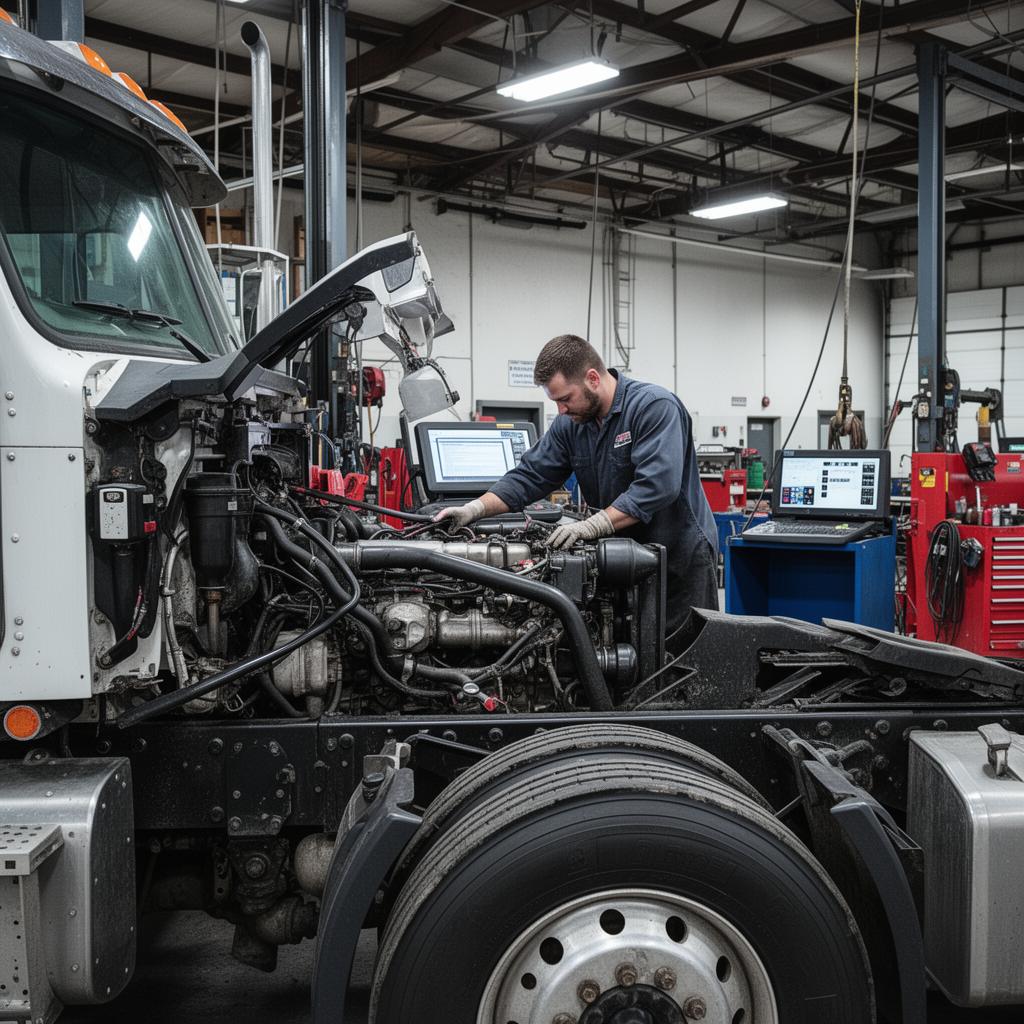
Diesel technician
Keep trucks, fleets, and heavy equipment running. Most programs run 9 to 18 months at vetted, accredited schools and colleges.
If freight moves, somebody keeps it moving.
Diesel technicians work on the equipment the economy physically runs on — semis, fleet vehicles, construction and agricultural machines. Modern diesel work is as much diagnostics and electronics as wrenching, and shops are competing hard for people who can do both.
A typical day
- Run diagnostics on engine, emissions, and electrical faults
- Perform preventive maintenance on fleet vehicles
- Rebuild or replace major components
- Service brake, hydraulic, and drivetrain systems
- Document repairs and parts for the fleet record
What you walk out able to do
- Diagnose diesel engine and aftertreatment system faults
- Service brakes, hydraulics, transmissions, and drivetrains
- Read wiring diagrams and troubleshoot electrical systems
- Use manufacturer diagnostic software
- Prepare for ASE medium/heavy truck certifications
Where people work
How you get started
01
Request info on Diesel technician
A short form: your zip code, your schedule, and when you want to start. About a minute.
02
See the schools that actually run it
Vetted, accredited schools and colleges near you offering this exact program — with start dates and real costs.
03
Talk to an advisor at the school you pick
You choose who reaches out. They answer cost, aid, and schedule questions in one conversation.
Is this the right fit?
This is for you if…
- You'd rather diagnose real machines than sit at a desk
- You want a trade that can't be offshored
- You're comfortable with heavy, greasy, physical work
- You want overtime available when you want the money
This isn't for you if…
- You want clean, climate-controlled conditions
- You aren't interested in the electronics side
- You can't lift or work on your feet all day
Questions people ask first
Close cousins worth a look
Find the diesel technology program that actually fits you.
Every semester you wait is a paycheck you don't get back. Three minutes now can save you years.
* Pay figures. "Typical pay" ranges are estimates, not offers or guarantees. Ranges are drawn from the U.S. Bureau of Labor Statistics Occupational Employment and Wage Statistics and Occupational Outlook Handbook for the closest matching occupation, and generally span the 25th to 75th percentile of national annual wages for that occupation (entry-level earnings are commonly at or below the bottom of the range). Actual earnings vary by state, metro area, employer, shift, certification, and experience, and no school or program can promise a specific wage. Source: bls.gov. Figures are reviewed periodically; the BLS site always holds the most current data.