
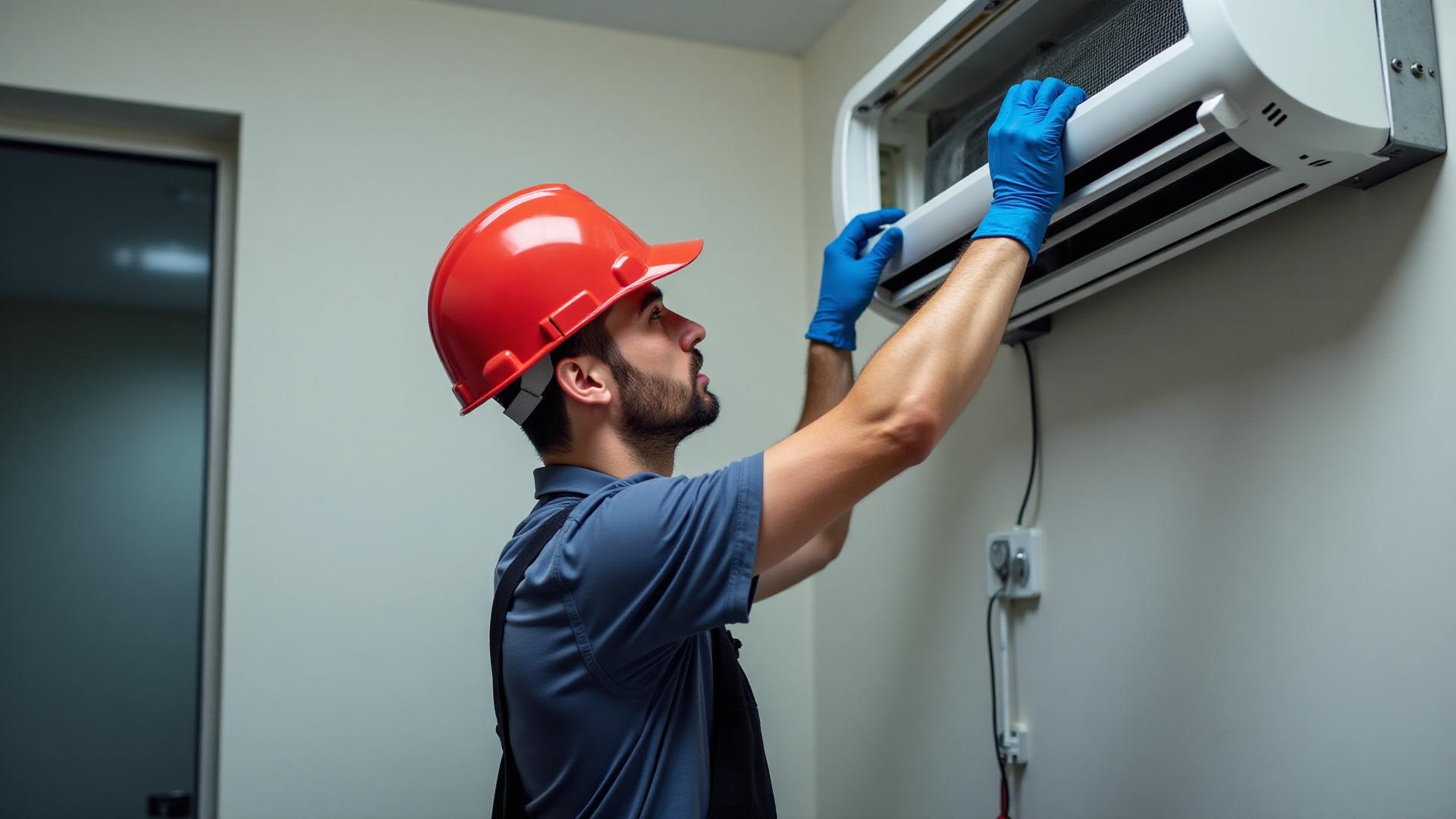
HVAC technician
Install and service the heating and cooling systems every building depends on. Most programs run 6 to 12 months at vetted, accredited schools and colleges.
Nobody waits three days for heat in January.
HVAC is the rare trade with two busy seasons and no off switch. You diagnose systems, replace components, run new installs, and keep commercial buildings inside spec. The work is technical, physical, and priced accordingly — and it can't be shipped overseas or handed to software.
A typical day
- Diagnose a unit that isn't cooling and pinpoint the failed component
- Braze line sets and pull vacuum on a new install
- Read pressures, temperatures, and electrical values against spec
- Walk a homeowner or facility manager through what you found
- Handle refrigerant to EPA standards
What you walk out able to do
- Service and repair residential and light commercial HVAC systems
- Sit for EPA Section 608 refrigerant certification
- Read wiring diagrams and troubleshoot electrical controls
- Perform brazing, evacuation, and charging procedures
- Work safely on rooftops, in crawlspaces, and around live circuits
Where people work
How you get started
01
Request info on HVAC technician
A short form: your zip code, your schedule, and when you want to start. About a minute.
02
See the schools that actually run it
Vetted, accredited schools and colleges near you offering this exact program — with start dates and real costs.
03
Talk to an advisor at the school you pick
You choose who reaches out. They answer cost, aid, and schedule questions in one conversation.
Is this the right fit?
This is for you if…
- You'd rather be diagnosing real equipment than sitting behind a screen
- You want a license and a truck, not four years of tuition
- You're comfortable in attics, on roofs, and in tight spaces
- You want a trade you can eventually run as your own business
This isn't for you if…
- You want a desk job with predictable indoor conditions
- You aren't willing to be on call during peak season
- You're looking for something entirely remote
Questions people ask first
Close cousins worth a look
Find the HVAC program that actually fits you.
Every semester you wait is a paycheck you don't get back. Three minutes now can save you years.
* Pay figures. "Typical pay" ranges are estimates, not offers or guarantees. Ranges are drawn from the U.S. Bureau of Labor Statistics Occupational Employment and Wage Statistics and Occupational Outlook Handbook for the closest matching occupation, and generally span the 25th to 75th percentile of national annual wages for that occupation (entry-level earnings are commonly at or below the bottom of the range). Actual earnings vary by state, metro area, employer, shift, certification, and experience, and no school or program can promise a specific wage. Source: bls.gov. Figures are reviewed periodically; the BLS site always holds the most current data.