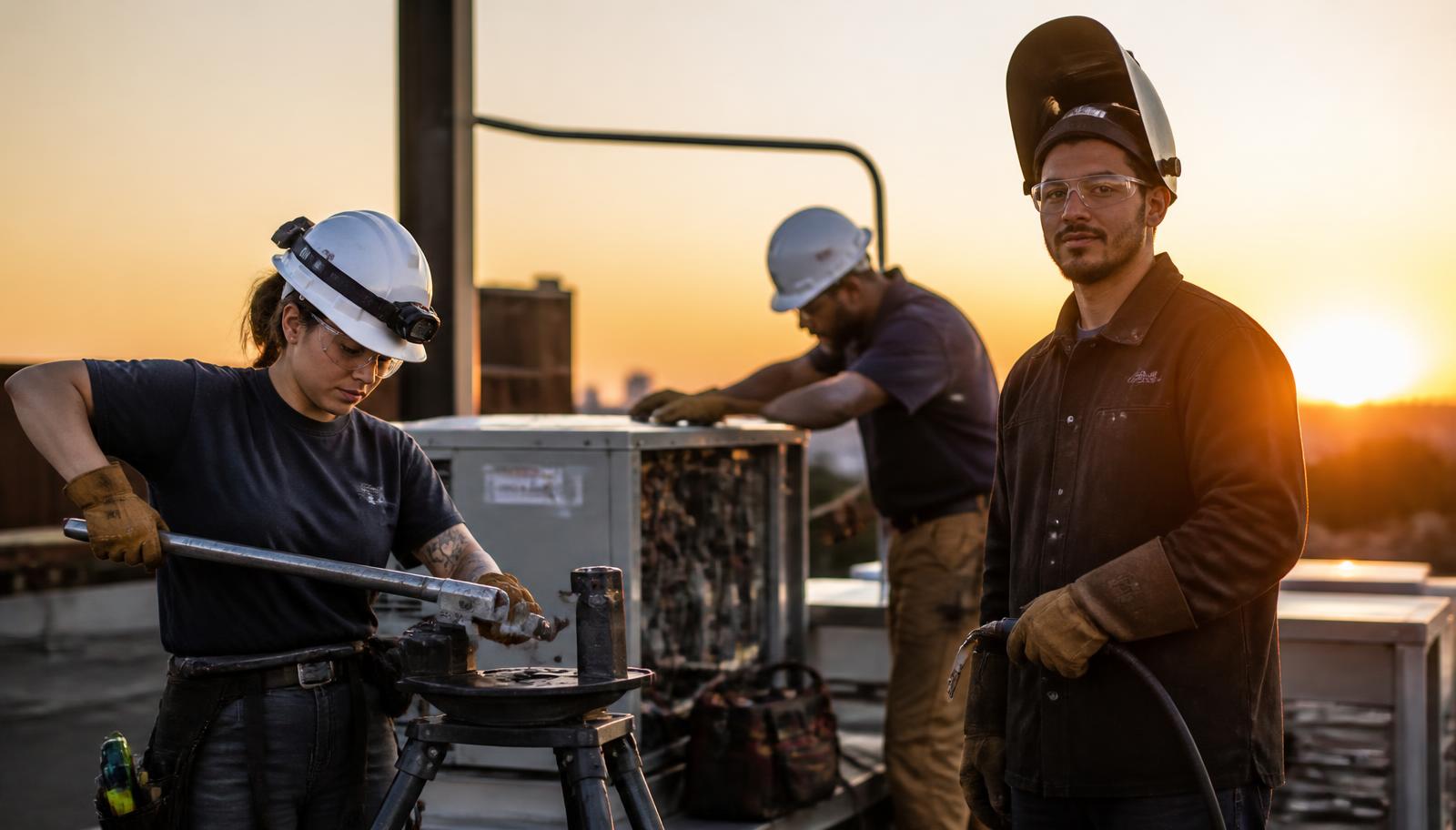
HVAC technician, electrician, and welder working together on a job site at sunset

    Career-Bond Industry Report

    Skilled Trades Career & Industry Report

    Four of the most in-demand trades, side by side: what the work is, what it pays, how you train, and which one actually fits how you like to work.

    2.2M+

    Combined 2024 employment

    Across the four featured occupations

    210,700

    Projected annual openings

    Combined, 2024–34 (includes replacement needs)

    $51,000–$62,970

    Median pay range

    May 2024 national medians

    Industry overview

    Why skilled trades in 2026

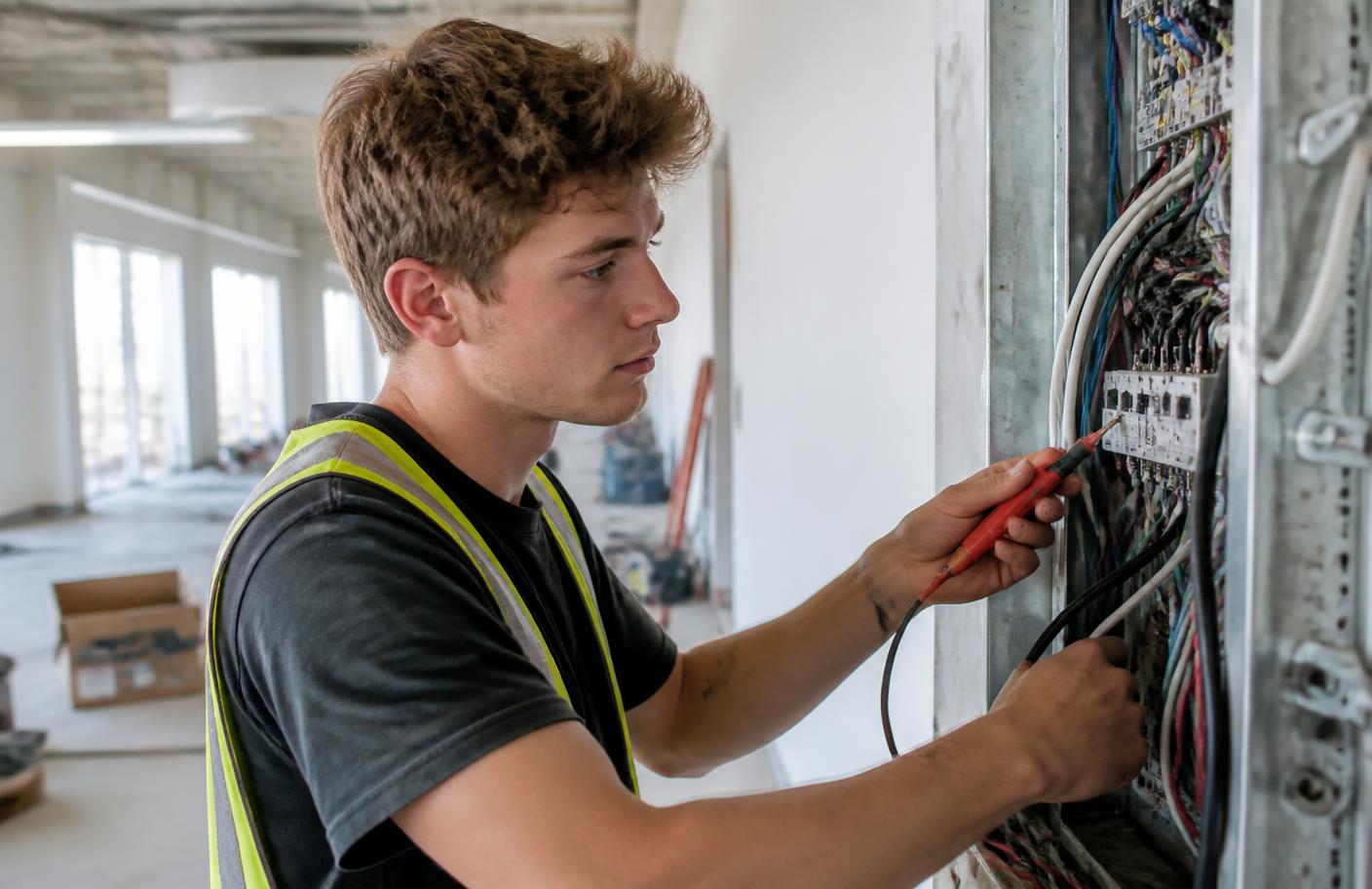
    Apprentice electrician testing wiring in an electrical panel on a commercial job site

    Skilled trades keep physical infrastructure running — buildings, power, water, manufacturing, energy systems, and the equipment everything else depends on. Most of that work happens onsite, with hands on the equipment, which is why it can't simply be offshored.

    Demand in these occupations comes from two directions: employment growth and replacement needs as current workers change occupations or retire. Both feed the same number — projected annual openings — and across the four featured careers those openings are substantial.

    • These occupations support essential infrastructure, buildings, manufacturing, energy, maintenance, and repair.
    • Much of the work must be performed onsite and cannot simply be offshored.
    • Demand is driven by both employment growth and replacement needs.
    • Across the four featured occupations, projected annual openings are substantial.

    For context, BLS projects overall U.S. employment growth of about 3.1% from 2024 to 2034. Electricians (9%) and HVACR technicians (8%) are projected to grow faster than that overall rate. Projected openings are not the same as newly created jobs — many openings are expected to come from replacement needs.

    On the job

    Where you would actually work

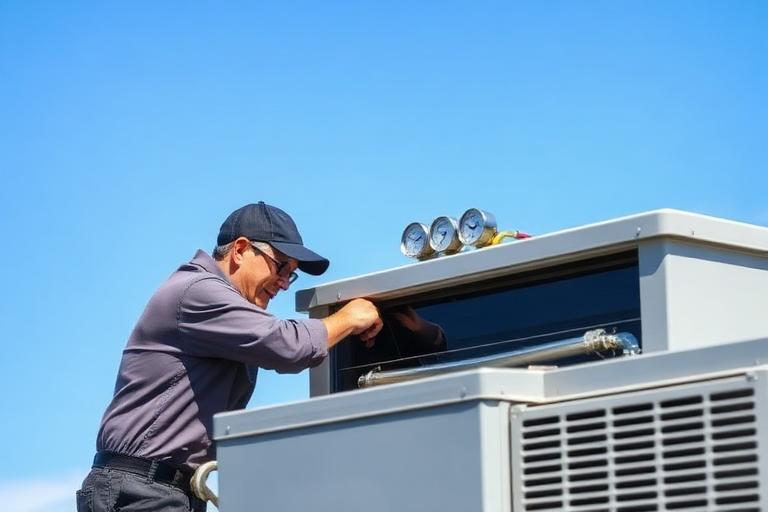
    HVAC technician servicing a rooftop condensing unit
    Rooftops, mechanical rooms, and homes. HVAC service calls change daily.
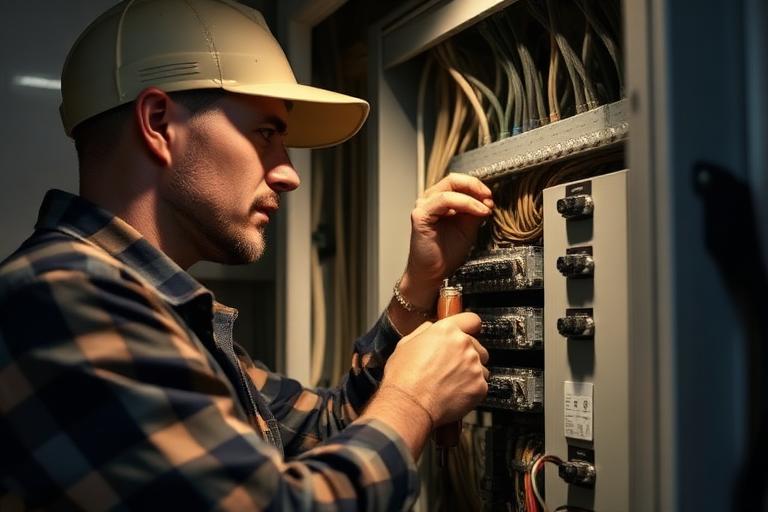
    Electrician wiring a commercial panel
    Panels, conduit, and controls on commercial and residential builds.
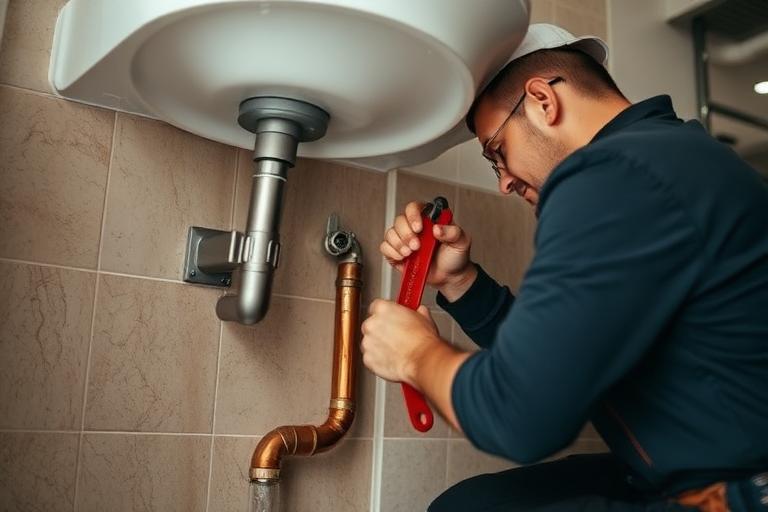
    Plumber fitting copper pipe under a sink
    Service work, remodels, and new construction rough-ins.
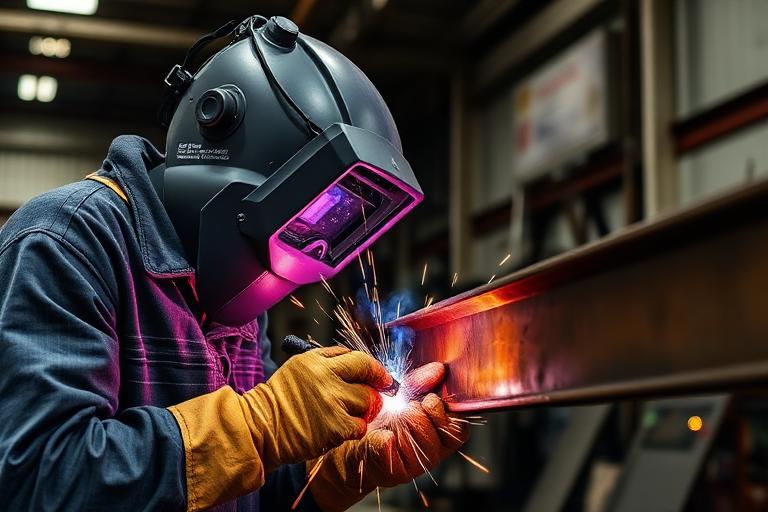
    Welder joining a steel beam in a fabrication shop
    Fab shops, manufacturing floors, pipelines, and structural sites.

    Side by side

    Quick career comparison

    The fastest way to answer one question: which of these sounds most like me?

    Choose a view

    What you do
    Installs, services, and troubleshoots heating, cooling, and refrigeration systems
    Median pay
    $59,810
    Growth
    8%
    Annual openings
    40,100
    Training route
    Certificate program plus on-the-job training or apprenticeship
    Credential
    EPA Section 608 for handling regulated refrigerants; state/local licensing varies
    Environment
    Homes, businesses, rooftops, mechanical rooms; indoor and outdoor
    Strongest fit
    Mechanical troubleshooters who like variety and customer contact
    What you do
    Installs and troubleshoots wiring, panels, lighting, and control systems to code
    Median pay
    $62,350
    Growth
    9%
    Annual openings
    81,000
    Training route
    Commonly multi-year, often apprenticeship-based
    Credential
    Most states require licensing; requirements are not nationally uniform
    Environment
    Construction sites, industrial plants, commercial and residential buildings
    Strongest fit
    Systems thinkers who like math, diagrams, and detailed procedure
    What you do
    Installs and repairs water supply, drainage, fixtures, and sanitary systems
    Median pay
    $62,970
    Growth
    4%
    Annual openings
    44,000
    Training route
    Multi-year paid work experience plus classroom instruction
    Credential
    Most states require licensing; apprentice/journeyman/master structures vary
    Environment
    Homes, commercial buildings, job sites; often tight or dirty spaces
    Strongest fit
    Hands-on problem solvers who like repair work and service calls
    What you do
    Joins, repairs, and cuts metal using a range of welding processes
    Median pay
    $51,000
    Growth
    2%
    Annual openings
    45,600
    Training route
    Foundational courses through longer certificate or diploma programs
    Credential
    No single universal occupational license; AWS Certified Welder is performance-based
    Environment
    Shops, fabrication floors, industrial sites; heat, fumes, and noise
    Strongest fit
    Precision-minded makers who like fabrication and technical procedure

    Pay figures are May 2024 national medians; growth and openings are BLS 2024–34 projections.

    HVAC Technician

    HVAC Technician

    Heating, ventilation, air conditioning, and refrigeration systems.

    HVACR mechanics and installers work on heating, ventilation, air-conditioning, and refrigeration systems.

    The work can include installation, diagnostics, service, repair, preventive maintenance, electrical controls, airflow, and refrigerant systems.

    2024 employment425,200
    Projected growth, 2024–348%
    Projected annual openings40,100
    Median annual earnings, May 2024$59,810
    Typical entry education (BLS)Postsecondary nondegree award
    Additional preparationLong-term on-the-job training

    If you would rather diagnose a problem than sit in a meeting about it, HVAC rewards that instinct every single day.

    Electrician

    Electrician

    Power, lighting, communications, and control systems.

    Electricians install, maintain, and repair electrical power, communications, lighting, and control systems.

    Typical work can include reading plans, installing conduit and wiring, working with panels and controls, testing systems, troubleshooting faults, and following electrical codes and safety procedures.

    2024 employment818,700
    Projected growth, 2024–349%
    Projected annual openings81,000
    Median annual earnings, May 2024$62,350
    Typical entry education (BLS)High school diploma or equivalent
    Major training routeApprenticeship

    If you like knowing exactly why something works, and doing it right the first time, this is your lane.

    Plumbing

    Plumbing

    Water supply, drainage, fixtures, and building sanitary systems.

    Plumbers install and repair water supply, drainage, fixtures, sanitary systems, and other building plumbing systems.

    The national statistics used here combine plumbers, pipefitters, and steamfitters as one BLS occupational category.

    2024 employment504,500
    Projected growth, 2024–344%
    Projected annual openings44,000
    Median annual earnings, May 2024$62,970
    Typical entry education (BLS)High school diploma or equivalent
    Major training routeApprenticeship

    BLS plumbing statistics combine plumbers, pipefitters, and steamfitters. These figures should not be read as narrower plumber-only statistics.

    Nobody calls a plumber for fun. That is the point: the work does not disappear when the economy wobbles.

    Welding

    Welding

    Joining, repairing, and cutting metal across industrial settings.

    Welders use equipment to join, repair, or cut metal parts and products.

    The work exists across manufacturing, construction, fabrication, transportation equipment, energy, shipbuilding, repair, and other industrial settings.

    2024 employment457,300
    Projected growth, 2024–342%
    Projected annual openings45,600
    Median annual earnings, May 2024$51,000
    Typical entry education (BLS)High school diploma or equivalent
    Common preparationTechnical training plus on-the-job training

    BLS welding statistics combine welders, cutters, solderers, and brazers. These figures should not be read as narrower welder-only statistics.

    If you want to point at something physical at the end of the day and say you made it, welding delivers.

    BLS-sourced data

    Pay, growth, and openings come from the U.S. Bureau of Labor Statistics.

    No paywall

    The full report is free. Nothing is gated behind a purchase.

    Honest tradeoffs

    Every career lists the downsides, not just the upside.

    Two years or less

    Every path here trains in two years or less. No four-year degree.

    Not sure which trade fits you?

    The career quiz asks about how you like to work — interests, strengths, environment, and priorities — then points you toward the skilled-trades path that lines up best.

    Take the Skilled Trades Career Quiz

    Don't see the career you're looking for?

    This report covers four of the most popular skilled-trades paths, but it isn't every program available through Career-Bond.

    Explore All Skilled Trades Programs

    Pick a direction, and we'll find the training

    Once you know the trade you want, we match you with vetted, accredited schools and colleges near you that train for it — so you're comparing real options instead of searching blind.

    Find Training Options

    Data notes and disclosures

    • Median wages are national occupational statistics from the U.S. Bureau of Labor Statistics, not promises of individual earnings. Nothing here guarantees employment, salary, or career outcomes.
    • Projected annual openings include replacement needs as workers leave an occupation. They are not all newly created jobs.
    • Training costs vary by institution, state, program length, public or private status, tools and supplies, grants or scholarships, and apprenticeship structure. For institution-level cost data, use the U.S. Department of Education College Scorecard.
    • Licensing requirements for electrical, plumbing, HVAC contracting, and related work vary by state and locality and are not uniform nationally.
    • Registered Apprenticeship is a paid work-and-learning model. Not every trade-school program is an apprenticeship.
    • BLS plumbing statistics combine plumbers, pipefitters, and steamfitters. BLS welding statistics combine welders, cutters, solderers, and brazers.

    Sources

    Want this to read later?